Bedroom Design & Optimization
How to Compare Organic Mattresses by Materials, Support, and Certifications
“Organic” is a useful starting point, not a verdict. To compare mattresses with confidence, look past the label and consider what is inside, how the layers work together, whether the support suits your body and sleep position, and what a third-party certification actually verifies.
A thoughtful mattress choice is part comfort, part construction, and part careful reading. The goal is not to find a universally perfect bed, but to understand the trade-offs well enough to choose one that feels right in your room and works with the way you sleep.
Start with the whole mattress, not a single claim
Organic mattresses are often presented as a simple category, but the phrase can describe products with quite different materials and designs. One mattress may use natural latex as its main comfort and support material; another may combine latex with organic cotton and wool; a third may include an innerspring core or a mixture of certified and conventional components. These beds can differ in firmness, resilience, temperature feel, weight, and care requirements, even when their marketing language sounds similar.
Begin by asking what the word “organic” refers to. Does it describe the cotton cover, the wool, the latex, or only one part of the mattress? Are the layers certified individually, or is there a certification for the finished product? A clear materials list should identify each major component and, ideally, its position in the mattress. If a description relies on broad phrases such as “natural” or “eco-conscious” without naming materials, treat that as an invitation to ask for specifics.
It also helps to separate three questions that are sometimes blurred together: What is the mattress made of? How is it likely to feel and support you? And what evidence supports the claims made about its materials or production? Keeping these questions distinct makes comparisons more useful—and makes it easier to decide which features matter most in your own bedroom.
Understand the materials layer by layer
A mattress is a system. Its surface layers influence first impressions, cushioning, and pressure relief; deeper layers contribute to support, stability, and the way the bed responds when you move. Rather than choosing by a fashionable material name alone, examine how each component is used and what it is expected to do.
Natural latex: responsive, resilient, and substantial
Natural latex is made from rubber-tree sap, processed into a resilient foam. In a mattress, it may form a single comfort layer, several layers with different firmnesses, or much of the bed’s core. Many sleepers appreciate latex for its springy response: it tends to contour without the slower, sinking sensation associated with some other foams. That buoyancy can make changing positions feel relatively easy.
“Natural latex” and “organic latex” are not interchangeable labels. The first describes the material’s source or formulation in broad terms; the second is a claim that should be supported by relevant certification. Manufacturing method matters, too. Dunlop and Talalay are distinct processes that produce latex with different characteristics, though the final feel also depends on the recipe, density, layer thickness, and mattress design. Neither process alone tells you whether a bed will be comfortable for you.
Latex mattresses can be heavy, and some models have a pronounced buoyant feel. If possible, test one in person or check the trial policy and return logistics before ordering. Ask whether the latex is in a removable layer or integrated into a finished construction, and whether the supplier provides details about its origin and certification.
Cotton: the cover and quilting matter
Organic cotton is commonly used in mattress covers and quilting. It can contribute a soft, breathable surface, but it does not by itself establish that the mattress as a whole is organic. The cover’s weave, quilting, and thickness can change the initial hand-feel and how closely you experience the layers below. A plush quilted top, for example, may feel quite different from a taut, minimally padded cover over the same core.
Check whether the cotton is certified, whether it is blended with other fibers, and whether the cover is removable or intended to stay in place. A removable cover is not necessarily washable: follow the manufacturer’s care instructions rather than assuming that it can go into a household washing machine.
Wool: cushioning and temperature moderation
Wool may appear in a quilted layer or as part of the mattress’s fire-barrier system. It adds a distinctive, softly springy feel and is valued for how it interacts with moisture and temperature. Its presence, however, does not guarantee that a bed will sleep cool for every person. Room temperature, bedding, individual heat sensitivity, mattress construction, and the mattress protector all play a role.
Ask where wool sits in the build and what purpose it serves. If it is important to you for sourcing or animal-welfare reasons, look for precise documentation instead of inferring standards from the word “wool” alone.
Coils and hybrid construction
Some organic or natural-material mattresses combine latex, cotton, or wool with a coil support system. Coils can provide a more buoyant, familiar mattress feel, while the surrounding layers affect cushioning and pressure relief. A hybrid design may also allow more airflow through its core than a solid foam construction, though the complete feel depends on the design—not just the presence of springs.
When comparing hybrids, note whether the coils are pocketed individually or linked, how many comfort layers sit above them, and whether the mattress has reinforced edges. A coil count alone is not a complete measure of quality or suitability. Construction details, materials, and the way the bed feels under your body deserve equal attention.
Compare support in terms of your body and habits
Support is not synonymous with firmness. Firmness describes the initial impression of a mattress; support concerns how well its structure keeps your body comfortably aligned. A bed can feel firm but still leave a sleeper with pressure at the shoulders or hips. A softer surface may cushion those areas while providing a stable foundation underneath. The right balance varies with body shape, preferred sleep position, and personal comfort.
Side sleepers often look for enough give at the shoulders and hips to avoid a concentrated, uncomfortable pressure sensation. Back sleepers may prefer a surface that cushions the body while limiting an excessive dip through the middle. Stomach sleepers often prioritize a stable feel that does not let the torso settle too deeply. These are useful starting points, not rules: a person’s build, comfort preferences, and any individual health considerations can change what feels best.
If you share a bed, consider both sleepers. Differences in body weight, sleep position, and sensitivity to movement can make a single firmness preference difficult to predict. A split configuration, where available, may offer different comfort choices on each side. Otherwise, pay attention to motion transfer and whether movement from one sleeper is noticeable to the other.
Whenever possible, lie on a mattress in the position you normally sleep in, and spend long enough to notice more than its first impression. If testing at home, use the full trial period and give yourself time to adjust. A new mattress can feel unfamiliar at first, but persistent discomfort should not be dismissed simply because the materials are appealing or the label is reassuring.
Do not use a mattress comparison as a substitute for medical advice. If you have ongoing pain, a diagnosed condition, or specific support needs, consult an appropriate health professional about those needs. A mattress can influence comfort, but no general product description can promise to treat or prevent a health condition.
Read certifications with precision
Third-party certifications can make product claims easier to evaluate, but each one has a defined scope. A certification may address the content of a particular fiber, the source of an agricultural material, emissions from a finished item, or a restricted list of chemicals. It does not automatically verify every component, determine comfort, or prove that the mattress is the right choice for your body.
For organic mattress materials, look for documentation that names the certified material and explains whether the certificate applies to the ingredient, the processing chain, or the finished product. A logo on a website is not the same as a clear certificate reference. If information is unclear, ask the manufacturer which exact model is covered and whether the certification is current.
Certifications commonly encountered in bedding may focus on different issues. Some programs verify organic fiber content and chain-of-custody requirements. Others assess harmful substances in textiles or emissions from finished products. Responsible-sourcing standards may relate to animal-derived materials, while forestry certifications concern wood—not mattress performance. These programs are not substitutes for one another, so compare what each actually checks.
When a manufacturer cites a standard, consult the certifier’s own description of its criteria. Confirm whether the claim applies to the entire mattress or only a component such as the cotton cover. Also note that a certification does not establish that a product is completely free of every chemical, nor does it guarantee a health outcome. Its value lies in the specific, verifiable assurance it provides.
Be alert to vague language. “Green,” “clean,” “chemical-free,” and “non-toxic” can sound definitive while saying little without a defined standard and supporting evidence. A more useful product page identifies the materials, provides relevant certifications, and explains any limits on the claim.
Consider durability, care, and the life of the mattress
Durability is shaped by material quality, construction, use, and care. Ask about layer thicknesses, the nature of the support core, warranty coverage, and what the manufacturer considers normal wear. A long warranty is worth reading closely: it may cover specific structural defects while excluding ordinary changes in comfort or appearance. The trial period, return costs, and requirements for keeping the original packaging can be just as relevant to your decision.
Organic materials do not make a mattress maintenance-free. Use a supportive base that matches the mattress maker’s requirements, rotate the mattress if instructed, and protect it with a suitable cover or protector. Not all mattresses should be flipped; many have a designed top and bottom. Follow the care guide for your exact model rather than applying generic advice.
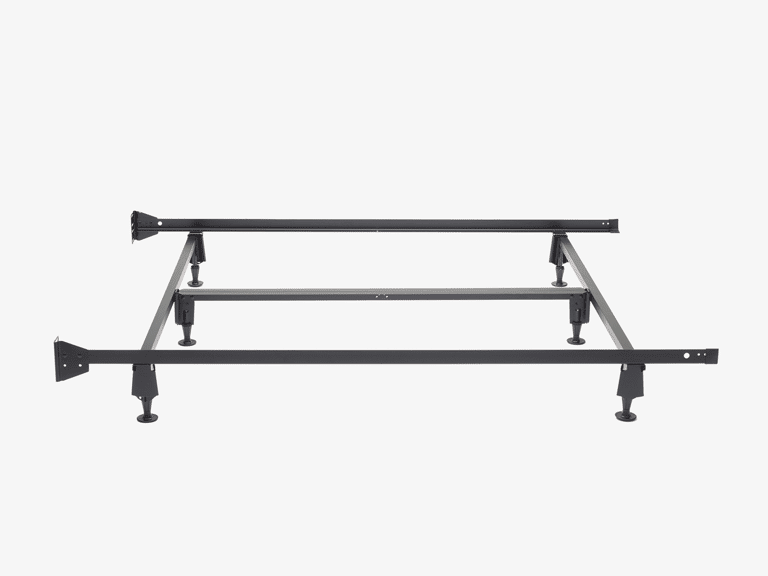
Before choosing a bed, confirm the mattress dimensions and the foundation requirements. Slat spacing, center support, platform construction, and weight limits can affect how a mattress performs and whether the warranty remains valid. Check total bed height as well, especially if you are keeping an existing frame or adjusting the room’s proportions. Compatibility is a practical detail, but it is part of the comfort equation.
For long-term value, consider the whole ownership experience rather than price alone: how the mattress is built, whether its components can be replaced or serviced, how it is delivered, and what happens at the end of its useful life. Recycling and take-back options vary by location, so ask about them rather than assuming that a natural-material mattress can simply be composted or disposed of without restriction.
A practical comparison checklist
When evaluating several options, record the same details for each mattress. A simple comparison sheet keeps elegant branding and persuasive adjectives from overshadowing the information you need.
- Materials: List every major layer, its position, and whether it is natural, synthetic, blended, or certified organic.
- Construction: Note whether the mattress uses latex, coils, or another support system, and how the comfort layers are arranged.
- Feel: Record firmness, responsiveness, cushioning, edge support, and motion transfer where those details are available or testable.
- Personal fit: Consider your usual sleep position, comfort preferences, heat sensitivity, and whether you share the bed.
- Certifications: Identify the certifier, the exact material or product covered, and the scope of the claim.
- Compatibility: Confirm size, foundation requirements, bed-frame support, and total height.
- Ownership: Compare trial terms, return or exchange costs, care instructions, warranty exclusions, delivery, and end-of-life options.
Give each factor a priority rather than treating every specification as equally important. A sleeper who values a lively, responsive feel may weigh latex construction heavily. Someone focused on a particular certified fiber may put documentation first. A shared bedroom may make movement isolation a deciding feature. The best comparison is personal, but it should be informed by verifiable details.
Common shortcuts that lead to confusion
Choosing by the word “organic.” A compelling label cannot tell you which components are certified or how the mattress feels. Read the materials breakdown and certification scope.
Assuming natural means comfortable. Natural materials have varied textures and performance characteristics. A latex mattress may feel buoyant; a wool-quilted surface may feel different from a smooth cotton cover. Preference matters as much as category.
Equating firmness with support. These qualities are related but distinct. Look for an overall feel that cushions where you need it and feels stable in your normal sleeping position.
Comparing specifications in isolation. Thread counts, coil counts, fill descriptions, or a single certification do not reveal the entire design. Consider the complete construction and the evidence behind claims.
Overlooking the foundation and return policy. A mattress needs compatible support, and a trial is only useful if you understand the conditions. Verify both before placing an order.
The considered choice
Comparing organic mattresses is an exercise in discernment: identify the materials, understand the architecture, evaluate the support in light of your own sleep habits, and read certifications for what they actually establish. No single badge or fiber can do all that work for you.
Start with the non-negotiables—size, budget, foundation compatibility, and any material preferences. Then narrow the field by feel, support, documented sourcing, and practical ownership terms. When descriptions leave questions unanswered, ask for a layer-by-layer breakdown and the certification details before deciding. An informed mattress choice is less about pursuing an idealized label than creating a sleep space that feels comfortable, works beautifully with your bedroom, and makes sense for the long term.